
Freight Class Calculator
Calculate your shipment's density and determine its estimated Freight Class.
* Freight class is estimated based on density (PCF).
- 100% free online calculators
- None of them require sign-up or installation.
- Real-time and precise results.
- Easy to use and clean interface.
- Browses well on mobile, tablet and desktop.
- Constantly improved and improved performance tools.
- We aim to offer a hassle-free experience to allow the users to concentrate on the outcomes rather than the complex procedures.
- Large Selections of Internet Calculators.
At Online Calculator, we are providing an expanding array of calculators and converters solutions to fulfill all individual, academic and business needs. All the calculators are well assembled to be precise and easy to operate.
Freight Class Calculator
One of the most important logistics tools is a Freight Class Calculator, a firm needs to define the right NMFC freight class of a shipment using its weight, dimensions, and density. It assists shippers to correctly categorize freight, directly impacting shipping rates, carrier acceptance as well as transit efficiency. This tool minimizes pricing errors by computing freight density and aligning it to the standard freight classes, thereby avoiding reclassification charges as well as carrier requirements. Freight class calculator is particularly useful when there are LTL deliveries or an eCommerce business or logistics representatives who have to make decisions regarding shipping as reliable and fast as possible and in a cost-efficient way.
Shipping Class Codes
Shipping class code is a regular code that is applied in the freight and logistic sector to designate shipments in terms of their shipping features. The codes assist the carriers to know how this product should be handled, stored and transported during transit. The shipment classes are provided based on determining factors like weight, size, density, value and handling needs. The shipping class code would be determined correctly, which means it will help to correctly price and avoid unforeseen costs or problems during the delivery. Shipping class codes are crucial to businesses that engage in the eCommerce sector or bulk shipping operations as it lets them cut costs of shipping and ensure effective operations in logistics.
Freight Class
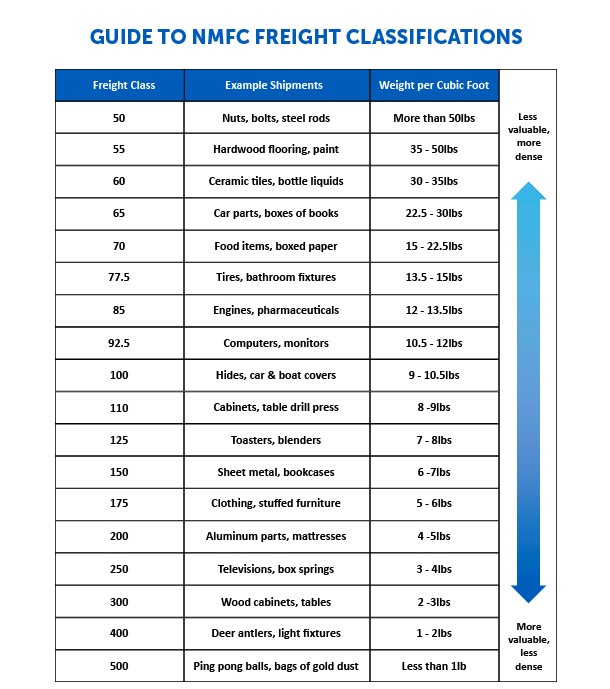
The National Motor Freight Classification (NMFC) system includes freight class, in which there are 18 freight classes of classes 50 through 500. Every freight class indicates the freight transportability and risk. Freight classes are categorized as lower classes, which are due to the density, weight, and easy handling items, and higher classes, which refer to the lightweight, bulk items, fragile, or high-valued parties. Freight class classification is important as the wrong classification will lead to reclassification and reimbursement of a bill and can cause the shipment to be delayed.
How to Figure Out Freight Class
In a bid to determine the freight class properly, a number of important issues should be taken into consideration:
- Shipment weight
- Length, width and height of packages.
- Freight density
- Convenience in managing and inconvenience in stacking.
- Product value and liability
The most effective method of ascertaining freight class is by carrying out freight class calculator. With entry of the dimensions and weight of a shipment, the calculator calculates the appropriate class automatically by perusing the industry standards.
Freight classification is important because the business will not spend money paying more than what is required to ship and carrier acceptance will be made easier.
Freight Density Calculator
Freight density calculator is a special tool that will be used to compute the density of the shipment in pounds per cubic foot. One of the most crucial aspects of freight class is the density. The freight density calculator asks to fill in shipment weight, and dimensions immediately gives out the density values and recommends the correct freight class. Freight density calculator minimizes calculation errors, avoids overcharges and shipments and enhances shipping accuracy- in the case of LTL (Less Than Truck load) freight shipments.
Cargo Classes
Cargo classes are defined as the various categories of different cargo types that are attributed with risks, difficulty to handle, and shipment efficiency. All types of cargo have a direct effect on shipping rates and carrier needs. The smaller cargo classes are usually compact, heavy and durable goods, whereas higher cargo classes are used in relation to oversized, lightweight, or delicate goods.
Getting to know the cargo classes enables shippers to choose the right classification, cut the expenses of shipping goods, and secure enhanced, legal transportation of goods.
FAQ's
A freight class is a standardized classification under the NMFC system that determines shipping costs based on a product’s density, weight, dimensions, handling, and liability. Freight classes range from Class 50 to Class 500, with lower classes being cheaper to ship.
You can calculate freight class by measuring the shipment’s weight and dimensions, then determining its density in pounds per cubic foot. Using a freight class calculator is the fastest and most accurate way to get the correct classification.
A freight density calculator is a tool that calculates shipment density by dividing total weight by total cubic feet. Density is a key factor used to assign the correct freight class and shipping rate.
Freight class directly affects shipping cost, carrier acceptance, and delivery accuracy. Incorrect freight classification can result in reclassification fees, higher charges, or shipment delays.
Shipping class codes are identifiers used by carriers to group products with similar shipping characteristics. These codes help determine handling requirements, pricing, and transportation methods.
Cargo classes and freight classes are closely related. Cargo classes describe the type of goods being shipped, while freight classes assign a numerical classification that determines shipping cost and handling rules.
Yes. Incorrect freight classification often leads to overcharges, billing corrections, penalties, and delayed deliveries. Always use a freight density or freight class calculator for accurate results.
Yes. Freight class and density calculators are especially useful for LTL (Less Than Truckload) shipments, where accurate classification is essential for correct pricing.